Weather
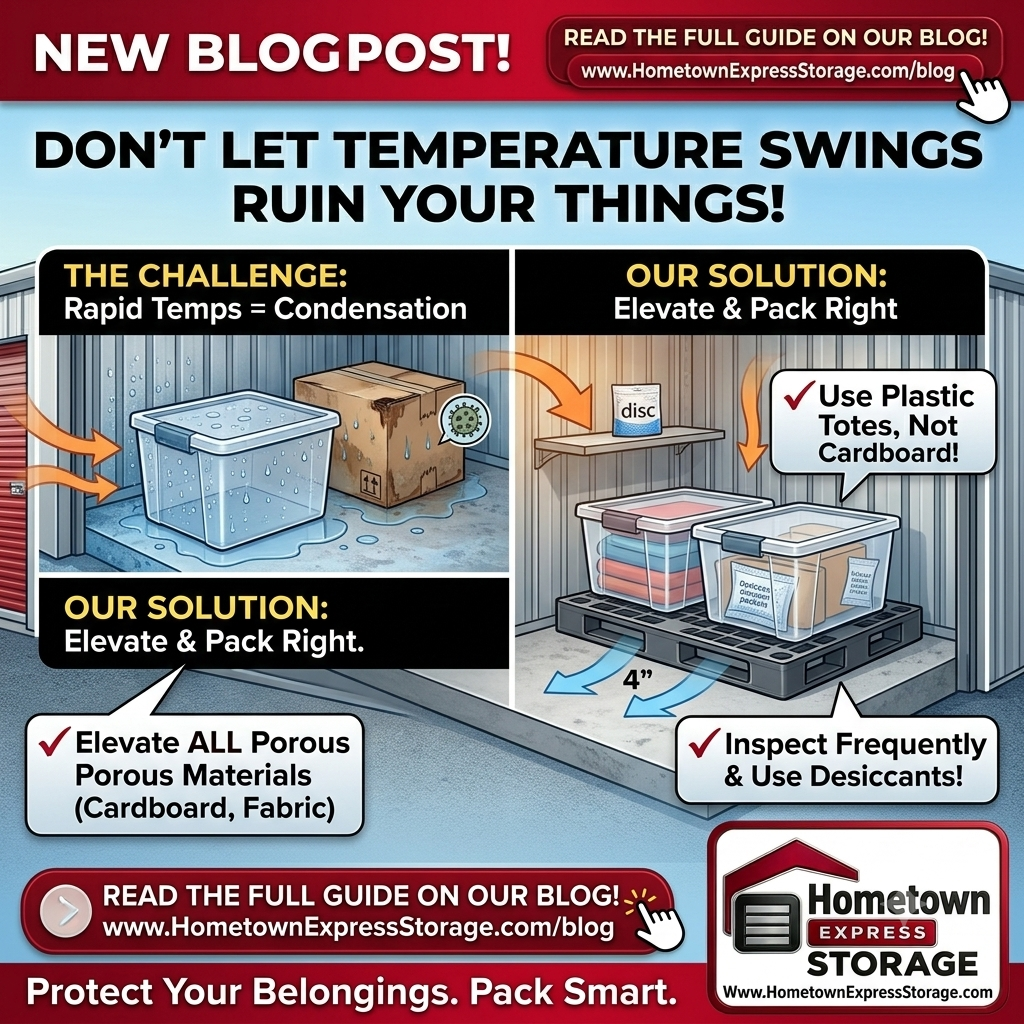
Condensation & Temperature Swings: Protecting Your Stored Items When weather swings sharply from cold to warm, a hidden challenge emerges in self-storage: condensation. Unheated, non-climate-controlled storage units—with durable metal roofs, metal walls, and concrete floors—naturally react to quick temperature spikes. The air warms up much faster than the dense concrete slab or your cold belongings inside. When warm, humid air hits those colder surfaces, water droplets form, much like ice water on a humid summer afternoon. While we install vapor barriers in our unit ceilings to block overhead moisture, sudden environmental shifts mean you need a proactive strategy inside your space. 4 Essential Steps to Keep Your Belongings Dry 1. Ditch Cardboard — Pack in Sealed Plastic Totes Cardboard boxes act like sponges. During high-humidity swings, cardboard absorbs moisture from the air, softens, and can foster mold growth on the items inside. The Fix: Move to heavy-duty, clear or opaque plastic totes with snap-locking lids. They create a tight seal against moisture and stack much safer than damp cardboard. 2. Elevate Porous Materials Off the Floor Concrete floors hold cold temperature longer than anything else in the unit. Any porous material sitting directly on the concrete will draw moisture up through capillary action. What to elevate: Cardboard, fabric, mattresses, wooden furniture, and rugs. How to do it: Use plastic pallets, wooden skids, or heavy-duty plastic shelving to keep everything at least 2 to 4 inches off the floor. Leave a few inches between your stacks and the metal walls to keep airflow moving. 3. Use Moisture Absorbers and Desiccants Proactively control humidity inside your totes and around the unit. Place desiccant packets (silica gel) directly inside your plastic storage tubs, especially with clothing, paper, or electronics. Set up bucket-style moisture absorbers (like DampRid) in open areas of the unit. Check and drain or replace them periodically as they collect water. 4. Inspect Your Unit Regularly The best defense against seasonal moisture is an active eye. ...
Aaron Caudell
July 20th, 2026